
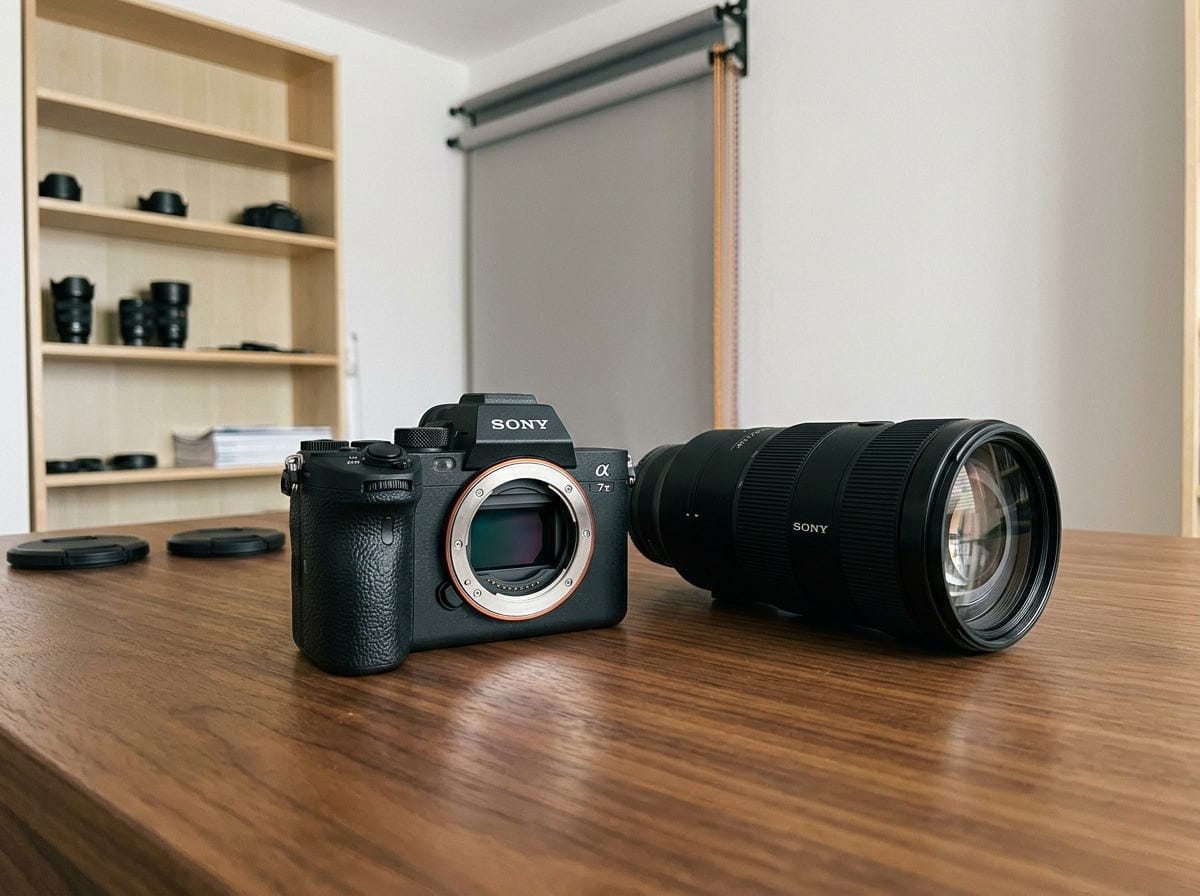
The Sony A7 V packs fast bursts, strong autofocus and capable video into one full-frame body. At about $2,900 without a lens, is it the right buy in 2026?
Camera buyers have always had to pick a lane. Want resolution? Buy one body. Want speed for sports and wildlife? Buy another. Shoot a lot of video? Expect to give up something stills photographers care about.
The Sony Alpha 7 V tries to ignore those lanes. It has a 33-megapixel partially stacked full-frame sensor, subject-recognition autofocus and bursts of up to 30 frames per second. On paper it suits landscapes, wildlife, events and professional video equally well.
The harder question is whether that flexibility is worth the money.
What actually changed
Look at the A7 V and you could mistake it for a light refresh. The resolution is still 33 megapixels, same as the A7 IV. The body looks familiar, and it still takes E-mount lenses.
The real changes are inside. The new partially stacked sensor reads out much faster, which allows blackout-free electronic-shutter bursts at up to 30 fps. That is triple what the A7 IV managed. Pre-capture can also save frames from up to a second before you fully press the shutter.
That matters more than it sounds. A bird lifting off a branch or a dog launching itself off the sofa is often over before your finger moves. Pre-capture gives you a second chance at moments you would otherwise miss.
Sony’s new BIONZ XR2 processor drives a smarter subject-recognition system, and the in-body stabilization is rated at up to 7.5 stops at the center of the frame. You feel these upgrades while shooting. They are more than lines on a spec sheet.
Image quality
Thirty-three megapixels is a sensible middle ground. It gives you room to crop and enough detail for landscapes, portraits and commercial work, without the huge files that come with 60-megapixel bodies.
The standout is dynamic range, especially in the shadows. DPReview’s independent testing found excellent shadow recovery and strong ISO invariance with the mechanical shutter. In practice, you can protect your highlights when you shoot and lift the dark areas of a RAW file later without paying much of a noise penalty.
There is a catch. The camera’s dual-gain dynamic-range advantage doesn’t carry over in the same way when you use the fastest fully electronic shutter. So you are choosing between the mechanical shutter for maximum latitude and the electronic shutter for speed.
High-ISO performance is very good, though in RAW noise tests the A7 V doesn’t consistently beat every full-frame rival. It is a fine camera. It won’t make up for poor light or a slow lens.
Autofocus and action
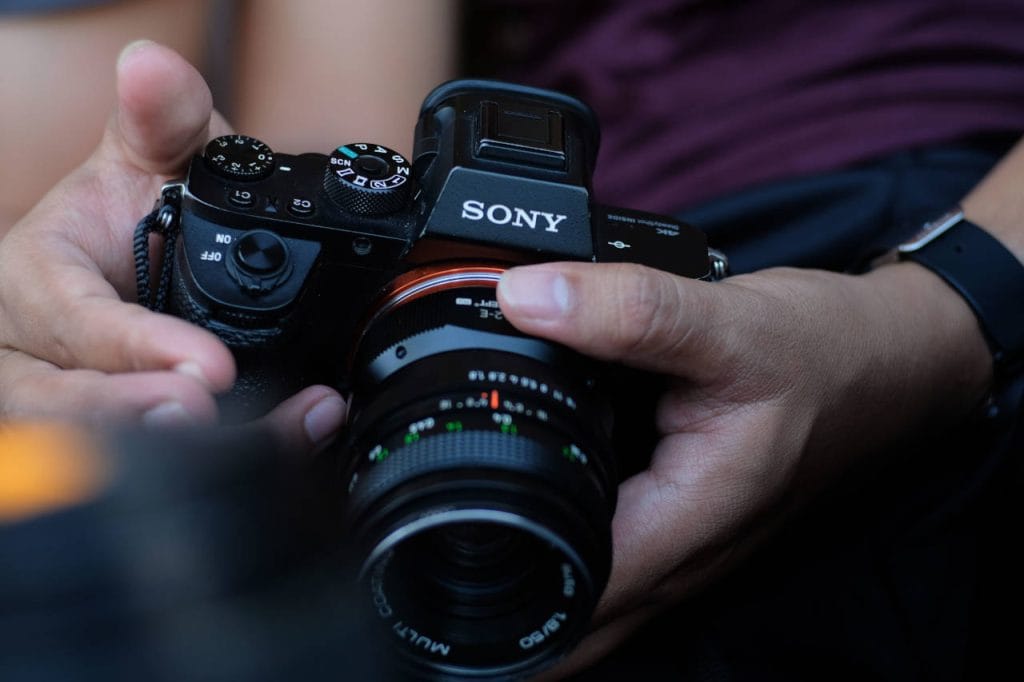
Autofocus is where Sony’s lead is easiest to see. The A7 V recognizes and follows people, animals, birds and other subject types, and it combines that with continuous autofocus and eye detection.
The benefit is simple: you spend less time wrestling with focus points and more time anticipating the shot. That helps at weddings, with kids, at sports and in wildlife work, where subjects never do what you want.
It isn’t flawless. Independent testers have reported occasional tracking misses, and not every lens can deliver the full burst rate. Still, for anyone who shoots unpredictable subjects, tracking, pre-capture and fast bursts together are a strong reason to look hard at this camera.
Video
Sony has made the A7 V a serious hybrid. It shoots oversampled 4K at up to 60 fps using the full sensor width, which produces detailed footage with plenty of room in the edit. Add 10-bit recording, S-Log3, S-Cinetone and AI-assisted auto framing, and it works for interviews, documentary work, commercial content and indie productions. The articulating touchscreen is handy, and you get mic and headphone jacks plus a full-size HDMI port.
Read the fine print, though. Shooting 4K at 120 fps applies a crop of roughly 1.5×, so a wide-angle lens gives a noticeably tighter view for slow motion. The camera also has no internal RAW video and no open-gate recording, and it lacks a few monitoring tools that rivals include.
If you shoot the occasional professional-looking clip, you may never miss them. If you are a filmmaker who regularly reframes footage for different aspect ratios, they could rule the camera out. The A7 V is a very good hybrid, but at this price it isn’t the most flexible video tool you can buy.
Handling and battery
Sony has never been romantic about ergonomics, and the A7 V is practical rather than charming. The deep grip, customizable controls and improved multi-angle screen suit long days of shooting. It also has an electronic viewfinder, weather-resistant construction and dual card slots.
Battery life is a real strength. Sony rates it at about 630 shots with the viewfinder or 750 with the rear screen, though your results will vary with how you shoot.
The body isn’t small, and a full-frame lens or two makes the whole kit noticeably heavier than an APS-C setup. That matters more than people expect. A camera that stays home because the bag is too heavy isn’t doing you much good.
E-mount has one of the biggest lens ecosystems around, with plenty from Sony and third parties at every price. One caution: some third-party autofocus lenses have needed firmware updates to work properly, so check compatibility before assuming your existing glass will behave.
Sony A7 V vs Fujifilm X-T5
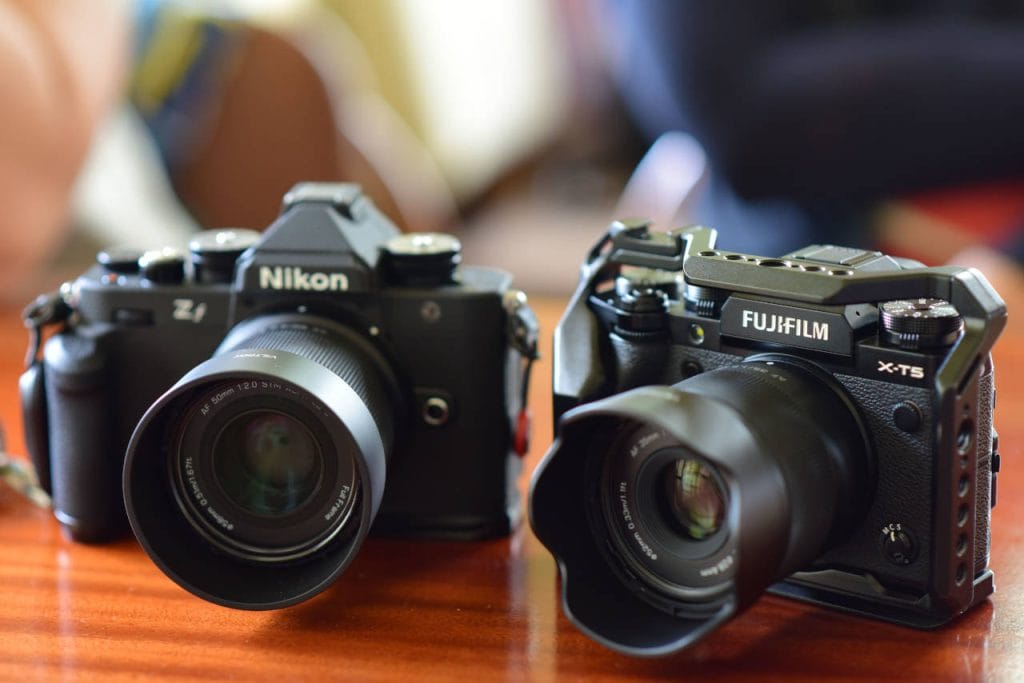
The Fujifilm X-T5 is a worthwhile alternative because it offers a different experience rather than a spec-for-spec match.
| Feature | Sony A7 V | Fujifilm X-T5 |
|---|---|---|
| Sensor | Full-frame, 33MP | APS-C, 40.2MP |
| Maximum electronic burst | 30 fps | 20 fps, with 1.29× crop |
| Stabilization | Up to 7.5 stops | Up to 7 stops |
| Video | 4K 60p full width; 4K 120p cropped | Up to 6.2K 30p; 4K 60p |
| Weight with battery | Approx. 695g | Approx. 557g |
| Lens mount | Sony E | Fujifilm X |
The Fujifilm has more pixels, a lighter body and physical exposure dials that encourage a slower, more deliberate way of shooting. APS-C also makes compact travel kits easy, especially with small prime lenses. Not every Fuji lens is tiny, but the system offers some excellent lightweight pairings.
Sony answers with a larger sensor, better subject tracking, much faster uncropped bursts and more flexible high-frame-rate 4K. For people in motion, wildlife and professional events, it’s the stronger all-rounder.
For travel, street and landscape work, and for photographers who enjoy the process as much as the results, the X-T5 is still very appealing. Fujifilm’s film simulations are also more than a gimmick: if you like a good JPEG straight out of the camera, they can save you a lot of editing.
The Sony may be the more versatile tool. The Fujifilm may be the one you actually enjoy picking up.
Canon and Nikon
The Canon EOS R6 Mark III is the toughest challenge to Sony’s hybrid pitch. It has similar stills resolution, faster electronic bursts, uncropped 4K/120p and internal RAW video, all things the A7 V lacks. Sony wins on low-ISO dynamic range and battery life, while Canon is the better pick for demanding video work.
The Nikon Z6 III is another strong rival, especially if you want internal RAW and a flexible video feature set. Its 24.5-megapixel sensor has less resolution, but that isn’t a problem if you value speed, manageable files and clean results.
None of these is a bad choice. The differences only start to matter once you know what you plan to shoot.
Who should buy it
The A7 V suits:
- Enthusiasts moving up to a serious, long-term full-frame system
- Wedding and event photographers who need dependable subject tracking
- Wildlife and action shooters who will use 30 fps bursts and pre-capture
- Professionals who switch between stills and high-quality video
- Current Sony E-mount owners whose lenses work with the new body
It’s a harder sell for:
- Beginners who haven’t yet figured out what they like to shoot
- Travel photographers who put weight and size first
- Fujifilm owners happy with their lenses and how they shoot
- Filmmakers who need internal RAW, open-gate recording or uncropped 4K/120p
- A7 IV owners who rarely shoot action and don’t need the new autofocus or video upgrades
Verdict
The Sony A7 V is one of the most complete enthusiast mirrorless cameras of 2026. Its strength isn’t headline resolution or cinema-grade specs. It’s that you get excellent RAW files, smart autofocus, fast bursts and good video in one body, without being pushed into a specialist camera.
That breadth is worth a lot if your work changes from job to job. It does cost something, though. At around $2,899 for the body alone, this is a big spend, and lenses will decide much of what you end up paying.
The X-T5 is lighter and more hands-on. The Canon R6 Mark III has stronger video features. The Nikon Z6 III is a capable alternative. But if you want one camera that can handle nearly anything, the A7 V belongs at the top of your shortlist.
Check Sony Alpha 7 V availability on Amazon →